See Also
Statistical Optics and Machine Learning in Spectroscopy, Microscopy, and Analytics
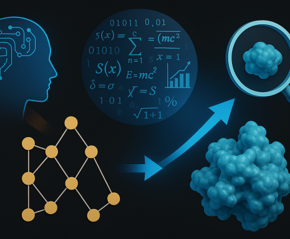
The photon is the fundamental quantum of optical energy and a natural carrier of information in light–matter interactions. Optical spectroscopy and microscopy resolved at the level of individual photons, and extended to high-throughput measurements, can therefore access exceptionally rich information about a system and its underlying dynamics (Tsao et al., 2025). Machine-learning methods further enable the discovery of hidden correlations in high-dimensional photon-counting data, improving classification accuracy and interpretability in molecular analytics.
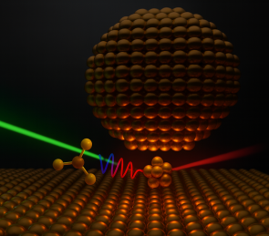
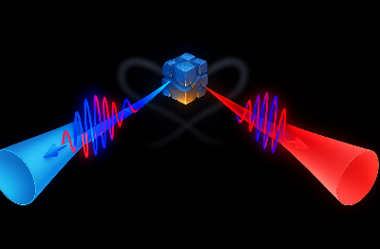
Through combined theoretical, numerical, and experimental efforts, we develop new optical methods based on multidimensional photon correlations in polarization, frequency, space, and time. Rigorous statistical analysis and uncertainty-aware model selection allow the identification of rare events, distinct reaction pathways, and signatures of non-Markovian dynamics. Recent advances include the introduction of two-dimensional, frequency-resolved second- and third-order correlation measurements, which can robustly identify excitonic cascade emission (Hinkle et al., 2025), as well as frequency-fluctuation–based super-resolution microscopy (Chen et al., 2025).
The Utzat Group