See Also

Quantum Light and Single-Emitter Spectroscopy
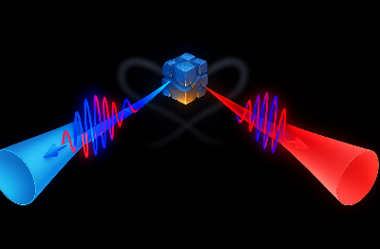
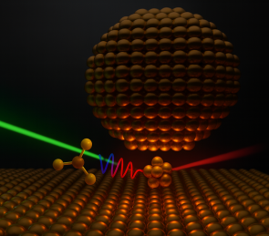
The quantum state of light has thus far been underappreciated in the optical spectroscopy of molecules and materials, with the vast majority of studies using coherent states from lasers. We develop methods in quantum spectroscopy that exploit correlations between photons in non-classical states to probe molecular and materials properties (Tsao et al., Nat. Nanotechnol., 2025). Our aims are twofold: (1) to establish new ways of accessing classical molecular and materials observables, and (2) to ultimately measure quantum observables that are inaccessible to any classical optical method. Recent work has demonstrated a high signal-to-noise solid-state platform based on III–VI quantum dot solids for entangled-pair spectroscopy (Tsao et al., arXiv, 2025). Parallel efforts focus on the condensed-phase properties of single-photon emitters in solid-state environments and on how structural parameters govern processes such as spin- and phonon-mediated dephasing of optical transitions. Our long-term goal is to establish quantum spectroscopy of materials and to improve solid-state single-photon emitters through a mechanistic understanding of their current limitations arising from detrimental system–bath interactions.
The Utzat Group